← Karakachan/Litter 2026
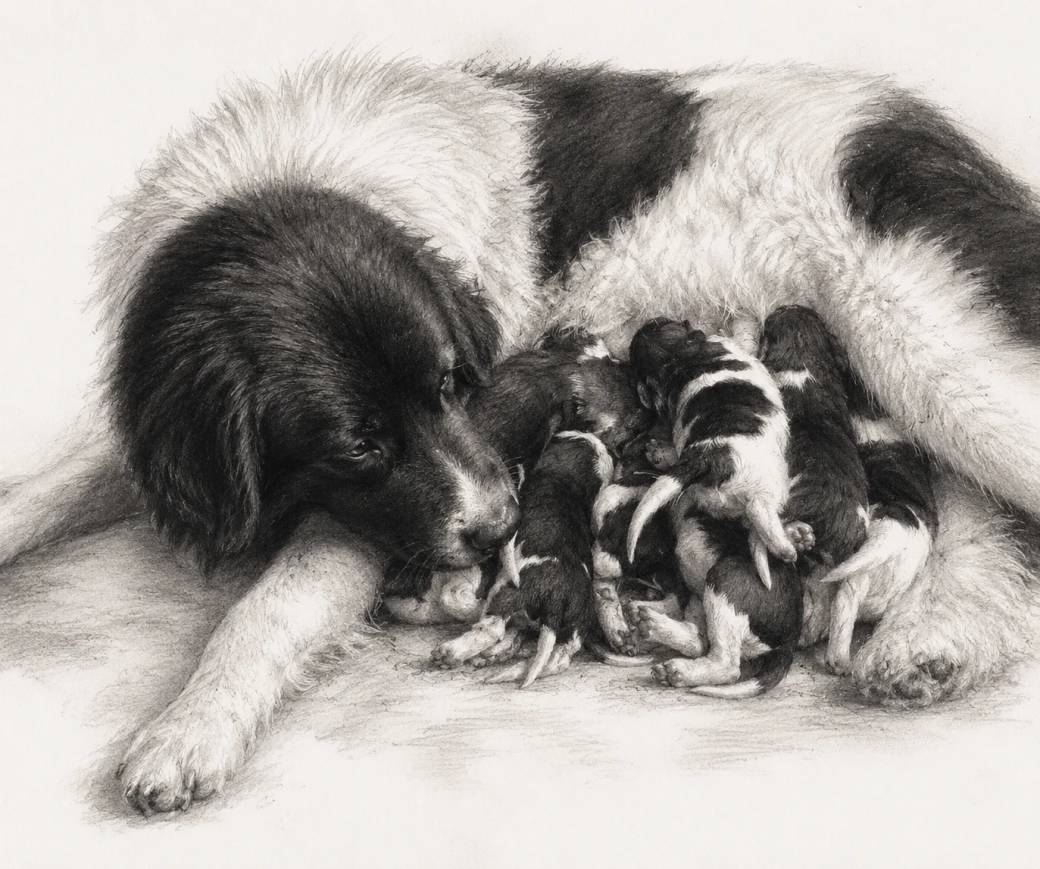
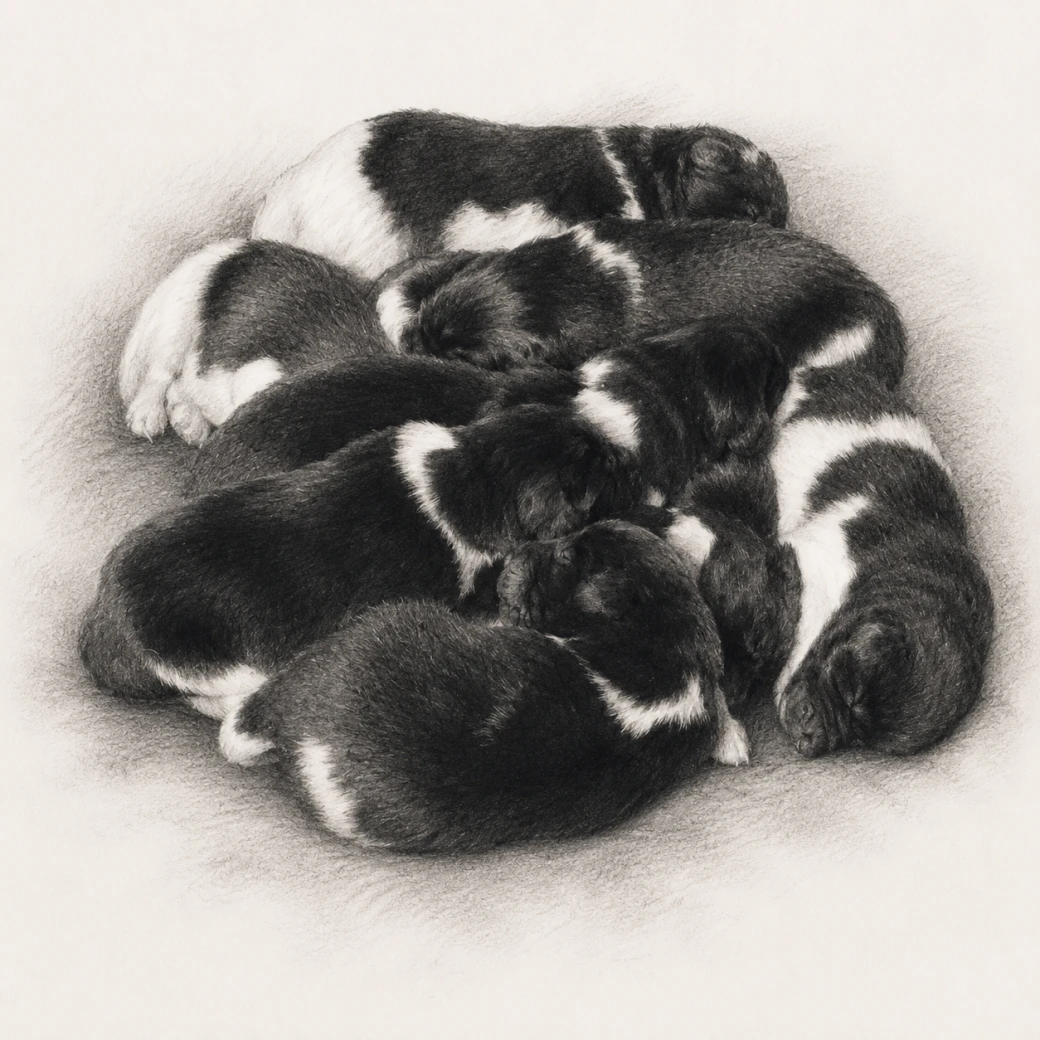
My litter is here — born on 5 May 2026.
“If the history of evolution has taught us one thing, it's that life will not be contained. Life breaks free, it crashes through barriers…” — and, as the chaos theorist Dr. Ian Malcolm so fittingly stammers to a close in Jurassic Park: “Life, uh… finds a way.”
How it happened
Despite asking the breeders in Bulgaria, who assured me the males don't reach sexual maturity until a year and a half, and despite a ready-made plan to keep the two apart for a while to avoid an early pregnancy in my female — life found a way. I come into the barn for my midnight check and see the two of them “tied”. To this day I can't understand how I missed her heat. But it is what it is now… lucky for you, because now there are Karakachans for horse farms!
From hands-on experience
Let me say one thing up front: I'm not a commercial dog breeder. I run a farm, and my dogs have a real, indispensable job here with me. They protect my foals from potential wolf attacks. So this litter isn't the result of sterile breeding planning — it's simply real, sometimes unpredictable life on the farm.
Why Karakachans
Karakachans aren't one-track specialists or fighting machines. They live on the farm, know horses, know people — and take their job as guardians seriously.
That's exactly why I live and work with Karakachans. My dogs prove to me every day that effective livestock guarding and an easy-going nature aren't mutually exclusive. They're the best alternative you can imagine on a farm:
They're there when it counts, and at ease with themselves when farm life runs its normal course.
He's always watchful. And in case of doubt, in real danger, a livestock guardian dog is also expected to defend — that's what he's there for. When I describe my dogs, they're an example of how you can shape existing genetics and what you can achieve when you work with them attentively, continuously and consistently. My descriptions are no guarantee that it happens on its own.
Who I'm looking for
Because my puppies are born straight into this job, I recommend homes on farms — including, of course, farms with horses.
Keeping a pair
A single dog — no pack, no backup, that's a sad thing. The Karakachan isn't a loner either. Sooner or later that shows in their behavior. We can happily talk through what fits your situation.
Space and a job
As a rule, I recommend that my Karakachans have a job. So watching over a farm/property/herd definitely makes sense. But they're extremely versatile. What do I mean by that? Well, when I look at my adult dogs, for example, I feel that with the right experience they can be kept well in other situations too. That's borne out by the history of this breed, which isn't classified as purely livestock guardian dogs and used to be widespread in rural regions.
The wolf situation
Of course they're suited to areas where the wolf is present. But fundamentally, they watch over your farm and your horses.
Experience with big dogs
You shouldn't be afraid of big dogs. Size may be the impression, but the gentle nature of my dogs can be guided well through consistent handling.
Willingness to work together
Once a puppy leaves, no switch is flipped. I stay reachable — for questions, for problems, to compare notes on what you're seeing. I want to know how my dogs are doing.
Interested in my dogs? Drop me a short email and I'll send you my phone number.
Inquire here